
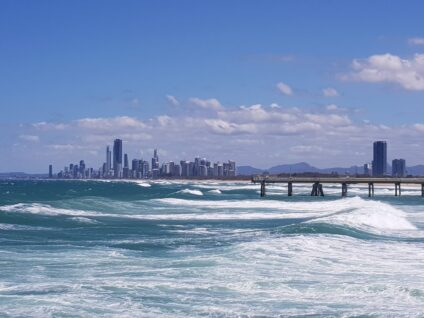
We moved to Queensland. You know, the place where it’s ‘beautiful one day, perfect the next’. For one year, while we searched for a house to buy and then moved into our new home, we enjoyed the sunshine and warmth of the summer and the cooler but un-Melbournelike weather in the winter. We ate out on the patio and sat outside whenever we entertained.
Then on Christmas day 2023, just 15 months after our move and only 5 months into living in our new home, we encountered our first ‘weather event’ or what I prefer to call the freak weather incident, a mini tornado. Christmas day had been exceedingly hot and humid and friends gathered at our place to have Christmas lunch, with the young ones spendig most of the afternoon in the pool. People left around 5pm and my husband and I cleared away, washed up and tidied up. Around 8pm just as we were getting ready to sit down and relax in front of the TV, the massive storm hit. It was nothing like I had ever experienced in my lifetime and we watched as the winds tore through our backyard. The stanchion holding the pool sail snapped and the sail broke off. Thankfully that was the only damage we experienced, apart from the debris.
We lost power overnight. The next morning a drive along the streets in the neighbourhood revealed the devastation everywhere: trees down, power lines down, and damage to property. We had been directly in the path of the storm, which only affected a few suburbs. We had no phone receptivity. The power outage lasted nearly three days. We continued to hear about the damage to some areas affected by what had by then been classified as a mini tornado, with winds of up to 150 kms per hour. Many people lost their homes.
Fast forward to March 2025, 14 months on. Enter Cyclone Alfred. In early March we started to see the news report about a cyclone that was headed for the south-eastern coast of Queensland and would affect people living between the Sunshine Coast north of Brisbane right through to the New South Wales north coast. We are smack bang in the middle of this spread of coastline.
This time, with plenty of warning and dire predictions about how severe this storm was and the damage expected, we prepared carefully. Our backyard is prone to water buildup when there is heavy and prolonged rain, so we joined a long line of cars to get sandbags being given out by the Gold Coast Council. After an hour of waiting where the 1.5km line had moved barely 300 metres, we gave up and went to a self serve station armed with a shovel and filled our own bags which we lugged home and stored in the undercover patio at the back of the house. We tested the pump that we had bought after the severe storm described above. We removed the pool sail, tied branches together of trees that could cause damage and took all the precautions we could. We grocery shopped and made sure the camp stove was working. We located candles and matches.
On the day leading to the Thursday night that the Category 2 cyclone was expected to make landfall we set up the pump, and rolled out the long line of hose leading from it down the garden and the long driveway, out onto the street.
We were ready, but Cyclone Alfie decided he wasn’t. He slowed down and the new expectation was landfall on Friday afternoon. Nope, he still wasn’t ready and Friday night was the new expected time. But for two days we had already been experiencing high winds and plenty of rain. On Friday night I took the first watch. The rain was torrential and I had the pump running almost continously pumping water out and preventing the backyard from flooding. At 1.30am I went to bed. In the morning I learned that it did not get worse and in fact the wind and rain died down somewhat.
We were on our phones for a while, calling and messaging our family and friends who had been concerned about us. Our Gold Coast friends celebrated with and we joked about surving a cyclone. We were still in celebration mode a couple of hours later when we lost power. In the days leading up to the cyclone we had carefully been charging everything all the time but that morning we didn’t because we thought it was all over. For two days we managed with candles and a camp stove and we survived.
Many areas of the Gold Coast were not minimally affected as we were. There was significant flooding. Huge trees were uprooted by the wind and tonnes of sand washed away, eroding the beaches significantly, leaving metres-high cliffs where there had been easy access to the beaches. The beaches, the pride and joy of the Gold Coast.
The Mayor promised that restoration work will be swift, in preparation for the Easter season when many people from other parts of the country get away to the Gold Coast. Some of that work is still happening six months later, but issues such as coastal erosion have no easy solution. Some residents are still dealing with blocked drains, fallen trees and lingering debris.
But life goes on. Visitors still flock to the Gold Coast, where even in the winter the water is warm enough to swim and surf. Us residents are welcoming the warmer days of spring after a cold winter. Veggies are being planted and Bunnings does a roaring trade as people focus on gardening and DIY projects. We still consider ourselves lucky to live in such a beautiful part of the world.
To quote a fellow Queenslander: “We wouldn’t change where we live. We just have to alter plans and live with Mother Nature.”